


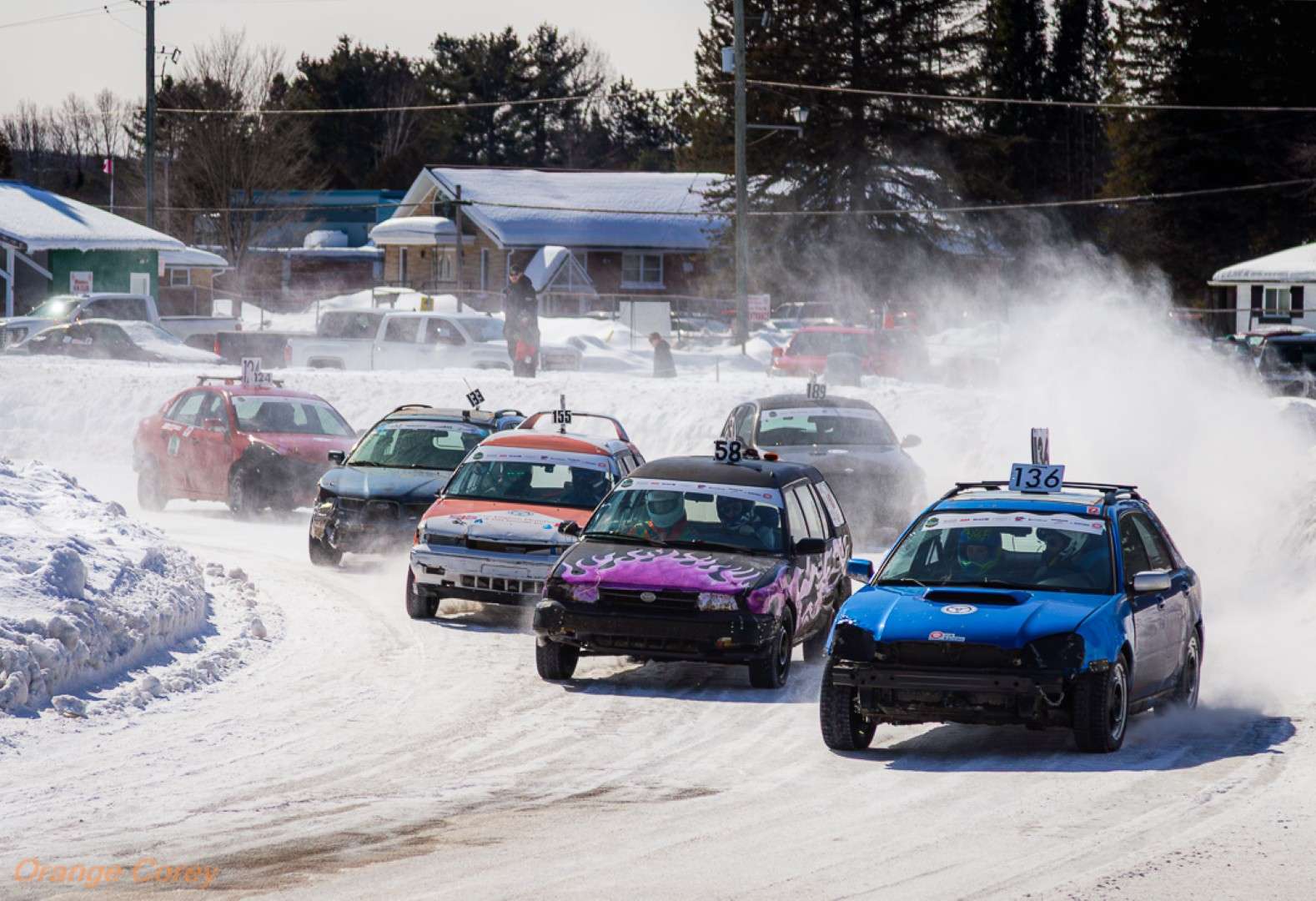
While most forms of motorsport have wrapped up for the season, CASC-OR Ice Racing is just getting ready to hit the track. The series is set to return for another six-weekend schedule at Minden Fairgrounds, a roughly two-hour drive northeast of Toronto.
CASC-OR Ice Racing will once again feature two types of tire classes, Rubber-To-Ice and Street Stud. Rubber-To-Ice sees cars competing with regular winter tires, while Street Stud uses tires with metal studs that increase grip, creating some added intensity on track. These classes are further broken down into front-wheel drive, rear-wheel drive and four-wheel drive.
New for this year, a Drift group will be part of the events, replacing the Street Cup class from the last two seasons. The Drift group will run under a separate sanction and be scored based on style and technique, offering a unique addition to the race weekends. Further details are in the works.
“It’s going to be interesting, I think they’re going to be able to get even more creative than on asphalt because of the lack of traction,” said Twin Lakes Motor Club’s Dustin Brown, a racer in the Street Stud class and organizer for the opening event of the season. “They’ll be able to really get it sideways and keep it sideways for quite a while.”

The series competes on a purpose-built, five-turn, kidney-shaped track with an icy surface and snowbank barriers. The Minden Kin Club prepares the track and runs a concession stand at the temporary facility.
CASC-OR Ice Racing is an entry-level series, providing a cost-effective option for competitors looking to try their hands at motorsports, while offering an environment with less risk to learn and improve skills.


“It’s one of the cheapest forms of door-to-door racing you can do,” said Brown. “You don’t have to be a mechanic to prep a car because you don’t need to put a roll cage or a racing seat or five-point harness or anything like that in there. You can just have an off-the-street car, taking the lights out and going racing essentially, putting some tires on.”
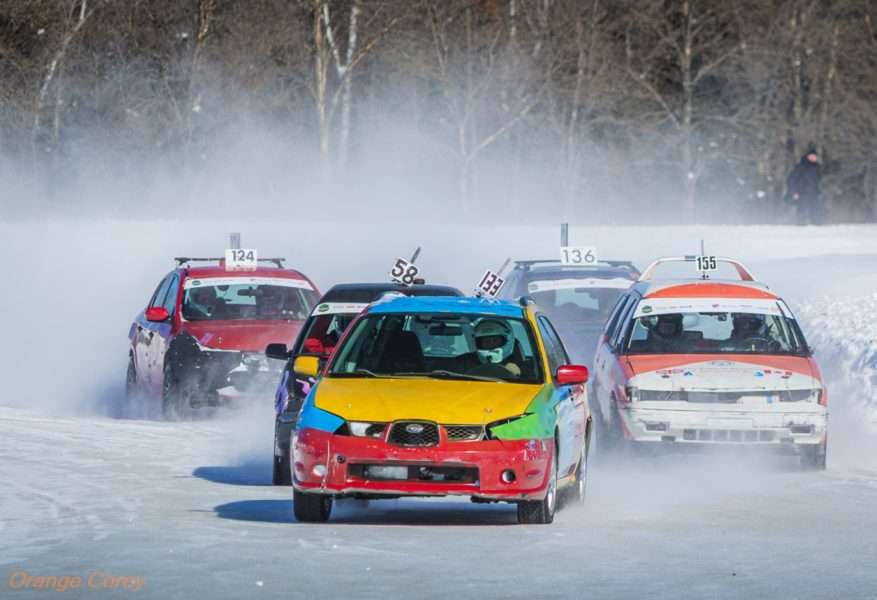
Examples of cars found in CASC-OR Ice Racing are a 2000s Subaru Impreza, 1990s Toyota Paseo and 1990s Honda Civic. Brown says it’s also economical for equipment, as cars can be left at the track for the entire length of the season and stored locally for the remainer of the year if needed.
Drivers looking to run for championship points must have a CASC C licence ($50) and club membership (roughly $35), while there are also options to run a limited schedule, with a $45 weekend pass available.
When it comes to learning, Brown says that smoothness gets accented in ice racing, a skill that helps drivers keep weight transfer from rapidly moving from side-to-side, improving lap times. That’s one of the ways that ice racing can help a novice or less-experienced racer prepare for a future move to summer competition.
“Learning to be in a group, your spatial awareness,” said Brown. “Learning to scan the track and see where other drivers are going, when you’re in an environment where, if you do tap, it’s very minor, whereas if you hit at CTMP, it’s probably going to be very expensive.
“Keeping your line consistent so that other people can pass you or lap you, without you being all over the corner,” he continued. “Keeping a nice, consistent line all the time is a good skill that ice racing really helps to dial in.”
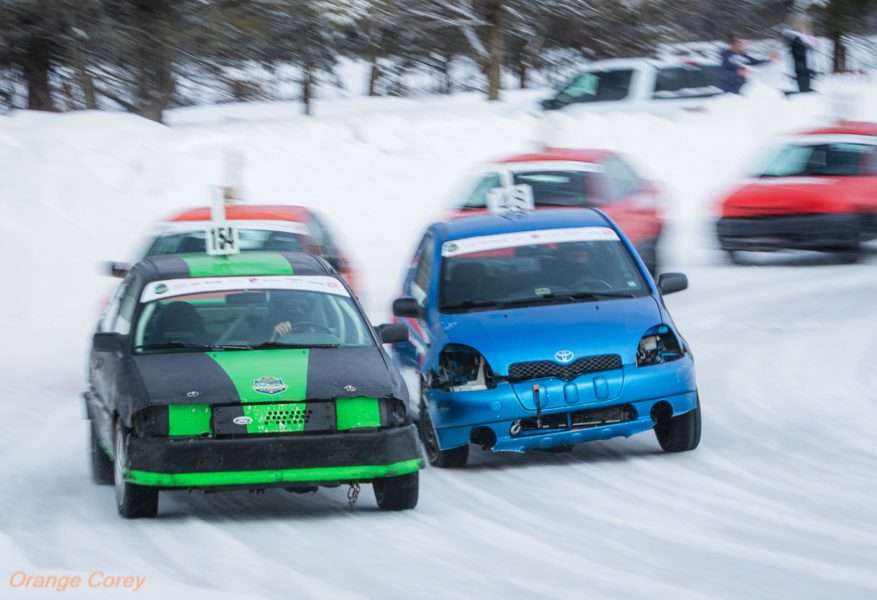
CASC-OR Ice Racing also provides a winter option for experienced drivers looking to scratch the itch to get back on track before the spring thaw.
More than just competition, Brown says the social aspect is another element that stands out to him.
“It’s kind of fun to hang out with everybody and talk race cars and stuff; there’s lots of people who I don’t see very often in the summertime,” said Brown. “Everybody just wants to get on the track and have fun. We’re still quite competitive, but nobody wants to win because somebody doesn’t get onto the track; if somebody’s broken, you get five or six people hovering around your car, helping you to fix whatever you need fixed.”
For anyone interested in ice racing outside of the driver’s seat, volunteer opportunities are available and spectators can watch the races free-of-charge. There’s even an official ride-along option known as the ‘Ice Taxi.’ Interested passengers can look for the Ice Taxi at each event, where a volunteer will help sign them up and provide a helmet.
The 2027 season gets underway on January 23-24, with all events held at Minden Fairgrounds in Minden, ON. For more information visit https://www.casc.on.ca/ice-racing.
2027 CASC-OR Ice Racing Schedule
Date – Organizing Club
January 16 – pre-season tech day (no racing)
January 23-24 – Twin Lakes Motor Club
January 30-31 – Toronto Autosport Club
February 6-7 – Deutscher Automobile Club
February 13-14 – British Empire Motor Club
February 20-21 – British Automobile Racing Club
February 27-28 – Peterborough Motor Sport Club
*All events are weather permitting. Decisions on whether to run are made in advance of the weekend and communicated via social media.














Discussion about this post