After two seasons of total dominance by Red Bull and three-time world champion Max Verstappen, Formula One’s three races in May offered some hope that fans might soon see a sustained fight at the front in the 2024 season.
May turned out to be a difficult month for Verstappen, with a mistake costing him a race win in Miami before eking out a victory in Imola, and then looking absolutely ordinary driving to sixth in Monaco.
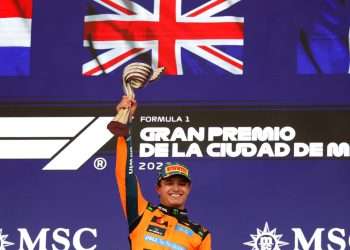
Although Verstappen appeared to have the pace to win in Miami, the pressure being applied from behind caused an off that damaged his floor and swung the race to McLaren’s Lando Norris.
A slim victory over the late-charging Norris in the Emilia Romagna Grand Prix came in a weekend where Verstappen failed to top any timesheets in practice before grabbing pole by a scant 0.074 seconds.

A week later, the Red Bull driver saw the wheels fall off in Monaco. Not only did he not start at the front in Monaco, but Verstappen also couldn’t manage a Top-5 grid position and failed to finish in the Top-5 for the first time since São Paulo in 2022.
The big question for most fans remains whether simple anomalies related to Miami, Imola and Monaco tracks caused a temporary dip in Red Bull’s competitiveness or the last three races signal a seismic shift in the pecking order.


Clearly, the rest of the pack seems to have closed the gap to Verstappen. Some pointed out that the RB20 potentially ran headlong into the law of diminishing, which dictates that the team out front improves at a slower rate than those behind, ensuring that the rest of the pack makes gains on the leading car. Although the Fédération Internationale de l’Automobile helped it along with some rule changes, the 2021 season served as a clear demonstration of the power of the law. That said, it took eight seasons for the pack to catch Mercedes after it came out way ahead under the new regulations for 2014.
Before fans get too excited, Verstappen’s woes on the streets of Monte Carlo appeared to be more about the way the RB20 finds its speed rather than vastly improved performance of its competitors. Essentially, the RB20 leans heavily on aerodynamics, with everything else taking second chair. When you have one of the greatest aerodynamic minds in your stable like Adrian Newey, going that way becomes a no-brainer, but it also comes with compromises.
When confronted with a more bumpy street circuit and low speed corners that demand the car attack the kerbs aggressively, the Red Bull seems to falter. It did so in Monaco, and also usually does on other bumpy street circuits like Singapore.
“We know that some tracks really don’t suit our car at the moment — we know our weaknesses,” Vertsappen said after Monaco.
“Any track that is bumpy or has kerbs or you have to ride a lot of kerbs. So, the street circuits will probably be a little bit tricky but hopefully by then we have a little bit of understanding of what is going on.”
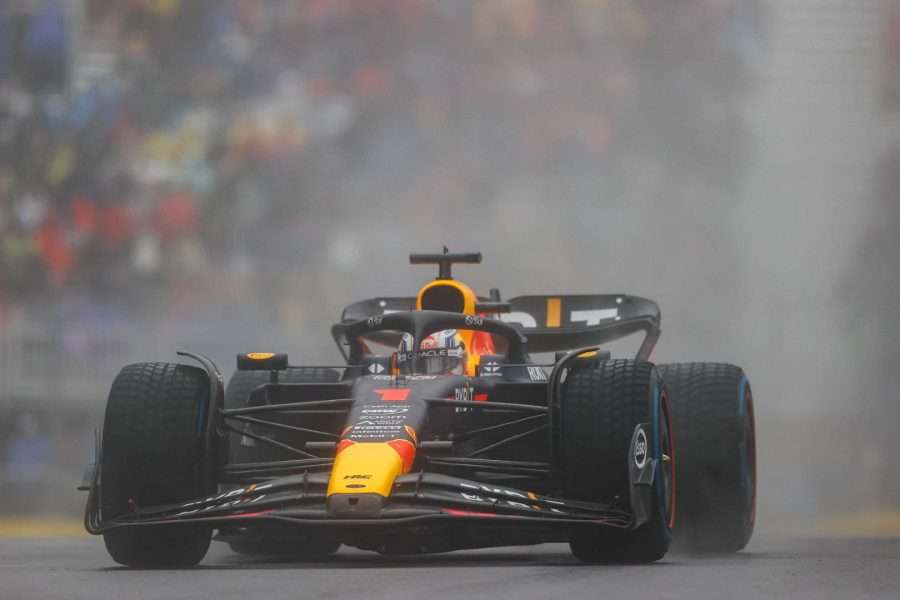
Remember that Verstappen missed getting into the final round of qualifying in the 2023 Singapore Grand Prix and struggled all weekend to get the Red Bull to work on its bumpy circuit. In the end, he started 11th and only managed to finish fifth in a car that typically scythed through the field when needed.
This happened in a year where Verstappen won 19 of 22 races and finished on the podium in every Grand Prix, except Singapore.
The Circuit Gilles-Villeneuve’s bumps, lack of high-speed corners and need to use the kerbs to find time likely means a less than optimal weekend for Verstappen and the RB20, even if he arrives as the winner of the last two races in Montreal.
Starting to think that the last three races signal the end of Red Bull’s time at the top would be premature.
“Any European track, where I consider it to be a normal track, I still think Red Bull will be favourites, but I don’t think they’ll dominate like they used to do and I think that’s good news for the championship,” said Monaco winner Charles Leclerc of Ferrari.
“Even if they’re favourites, they cannot afford to make any mistakes. That’s where both Ferrari and McLaren can capitalize.”
Bottom line here seems to be that Red Bull still possesses an advantage on most F1 weekends and continues to work hard to keep it, but sooner or later it will slip away.