Formula One got a non-Max Verstappen win in the Austrian Grand Prix, but it also highlighted the sport’s ongoing failure to reign in the three-time champion’s bad driving.
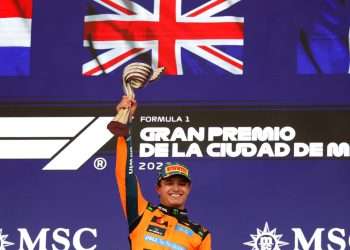
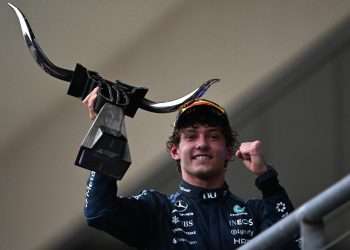
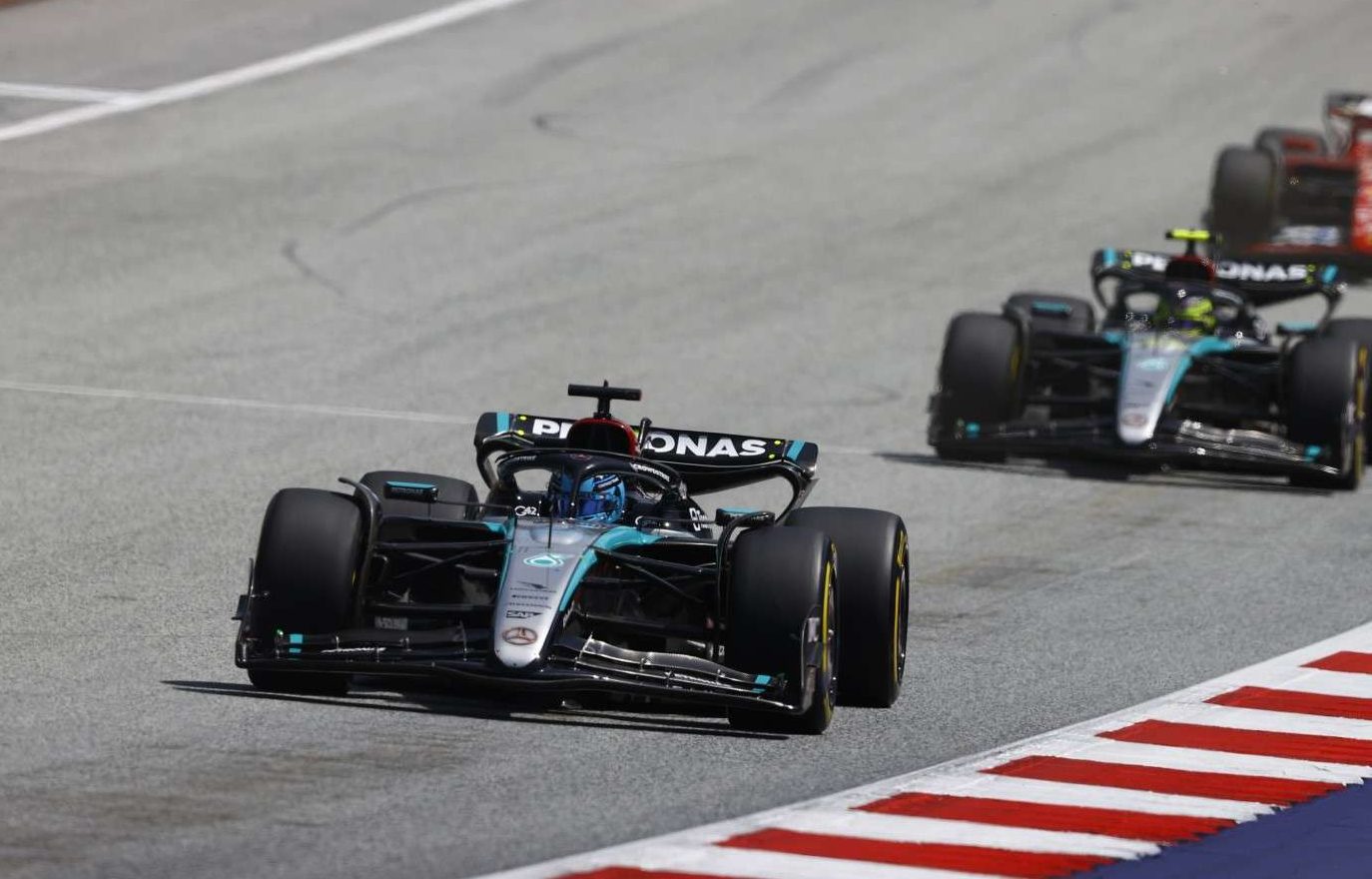
George Russell took his second career victory in Austria but only after leader Verstappen of Red Bull and challenger Lando Norris of McLaren made contact in the late stages to open the door for the Mercedes driver.
“A great result for us,” said Russell. “You have to be there to pick up the pieces and that’s what we were and, at the start of this year, we were never there, so the team’s done an amazing job. I feel like Canada was a missed opportunity for me and now it feels like we made up for that.”
Russell’s success came after Verstappen’s questionable tactics ended with the top two drivers out of the picture and left the Mercedes driver with a surprise victory on a day where it looked like Verstappen would win easily.

Following a slow pit stop on Lap 52, Verstappen’s lead over Norris shrank from about seven seconds to about two seconds and he exited the pits on used medium tires, while his rival slapped on a new set of the same rubber.
Things went downhill from there. Once Norris closed the gap and began challenging repeatedly for the lead, Verstappen replied with underhanded tactics: moving in the braking zone, reacting to Norris’ moves, and passing off track and not giving back the spot.


Finally, on Lap 64, Norris got a good run up the outside at Turn 3 and Verstappen again moved under braking and squeezed his rival. The ensuing contact caused a left-rear puncture for Verstappen and terminal suspension damage for Norris.
F1 fans know the scenario: Verstappen gets challenged and he pushes the limits to keep or take the lead. Ironically, Verstappen fans almost immediately began criticizing Norris’ moves as dive bomb attempts, while ignoring the inconvenient fact that the Red Bull driver used the same moves throughout his F1 career.
For his part, Norris tried to stay philosophical and didn’t directly blame Verstappen.
“I did all I could,” he said. “I gave a fair, respectful, on-the-edge battle, but that’s not what I got in return.”
When asked if he would reach out to Verstappen for a conversation, Norris replied: “It’s not for me to say, it’s up to him to say something. I did nothing wrong — he’s the one in the wrong, so he’s the one who should say something and not me.”
For his part, Verstappen seemed a bit contrite, although he didn’t admit any culpability.
“It’s unfortunate and stuff you don’t want to see happening — it’s as simple as that,” he said. “We need to look at the footage of what exactly went wrong because it was a bit of an awkward angle that we touched so something really weird, also for both of use to get a puncture. We also did so many things wrong in the race that we put ourselves in a position like that.”
Now the ball needs to be spiked into the Fédération Internationale de l’Automobile’s court and it really needs to take decisive action to stop this kind of driving once and for all.
Clearly, had the stewards penalized Verstappen for one of the transgressions leading up to the contact on Lap 64, Verstappen may have thought twice about squeezing Norris under braking.
Sadly, the FIA’s reluctance to apply the rules in race after race and year after year, when it comes to Verstappen, created the conditions for the accident in the Austrian Grand Prix and, as long as Verstappen feels untouchable, he will continue to drive roughshod over his rivals.
My advice to fans: don’t bet on the FIA taking action.