Several years ago, Inside Track Motorsport News editor Greg MacPherson asked me if I would be interested in writing stories about fellow members of the Canadian Motorsport Hall of Fame. So far, I’ve written twenty Looking Back stories about people I know who are Hall members, with another dozen still waiting to be written. But I’m making an exception for this story—because this man, despite three nomination attempts, is not yet in the Hall. He is, without question, very deserving of entry.

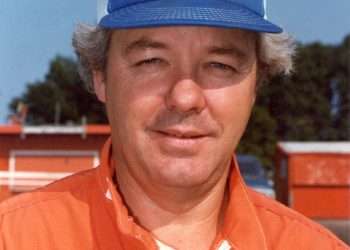
I first met Jack “Speedy” Monaghan a little over fifty years ago at Delaware Speedway, when I was once again filling in for regular track announcer Sandy Harrison, who was recovering from another heart attack. (Sandy had many of them, but always bounced back to return to the track.) I made it a habit to head into the pits before a race to dig up any newsworthy tidbits to share on the mic. That night, there was a strong contingent of Windsor-based drivers competing in the 100-lapper—Don Mallat, the “Tasmanian Devil”; Bob Merrifield in his Chrysler Kit Car; Brian Setterington in the McColl Racing STP machine; Larry LaMay; and a laid-back, cool-smiling guy chewing on a toothpick. That was Jack Monaghan.

I liked him instantly, and we quickly became friends. I liked him even more after seeing him race. While other drivers banged up their cars, his was pristine at the end. My best descriptor then—and still now—was smooth. Very smooth. That trait defined his entire career.



I started joking around with Jack, and he’d always respond with a punch to my left shoulder and a big laugh. His wife Nan, a true sweetheart, would start laughing whenever I showed up, knowing we were about to get into some fun. Over time, announcers—including myself—started calling him “Speedy Jack,” which was a lot easier than the awkward “Jack Speedy.”
Jack’s racing career began in 1961 and lasted until 2004—a remarkable 43-year span. In that time, he racked up 326 race wins and 18 track championships. His championship tally includes:
- 10 at Checker Flag Speedway (1965–1988)
- 2 at Mt. Clemens, Michigan (1977 and 1978)
- 2 International Windsor/Mt. Clemens Series titles (1977 and 1978)
- 1 Delaware/Windsor Series (1982)
- 3 at Delaware Speedway (1974, 1982, and a tie in 1992 with Steve Robblee)

He finished second in the 1993 Delaware standings—to my son Paul—and several other times as well. Jack was so dominant at Checker Flag that the track placed a bounty on him in both 1977 and 1981, offering extra money to anyone who could beat him.
One standout memory was the 1972 Maple Leaf 250 at Bob Slack’s Cayuga Speedway. Jack took the win against a tough field, but what I remember even more vividly was Brian “Blimp” Setterington, competing in his first long-distance race in the STP car. After the race, four of us had to lift him out of the car and into the back of Burt McColl’s camper—completely exhausted. I’ve never seen a redder face. We cooled him down with bags of ice.
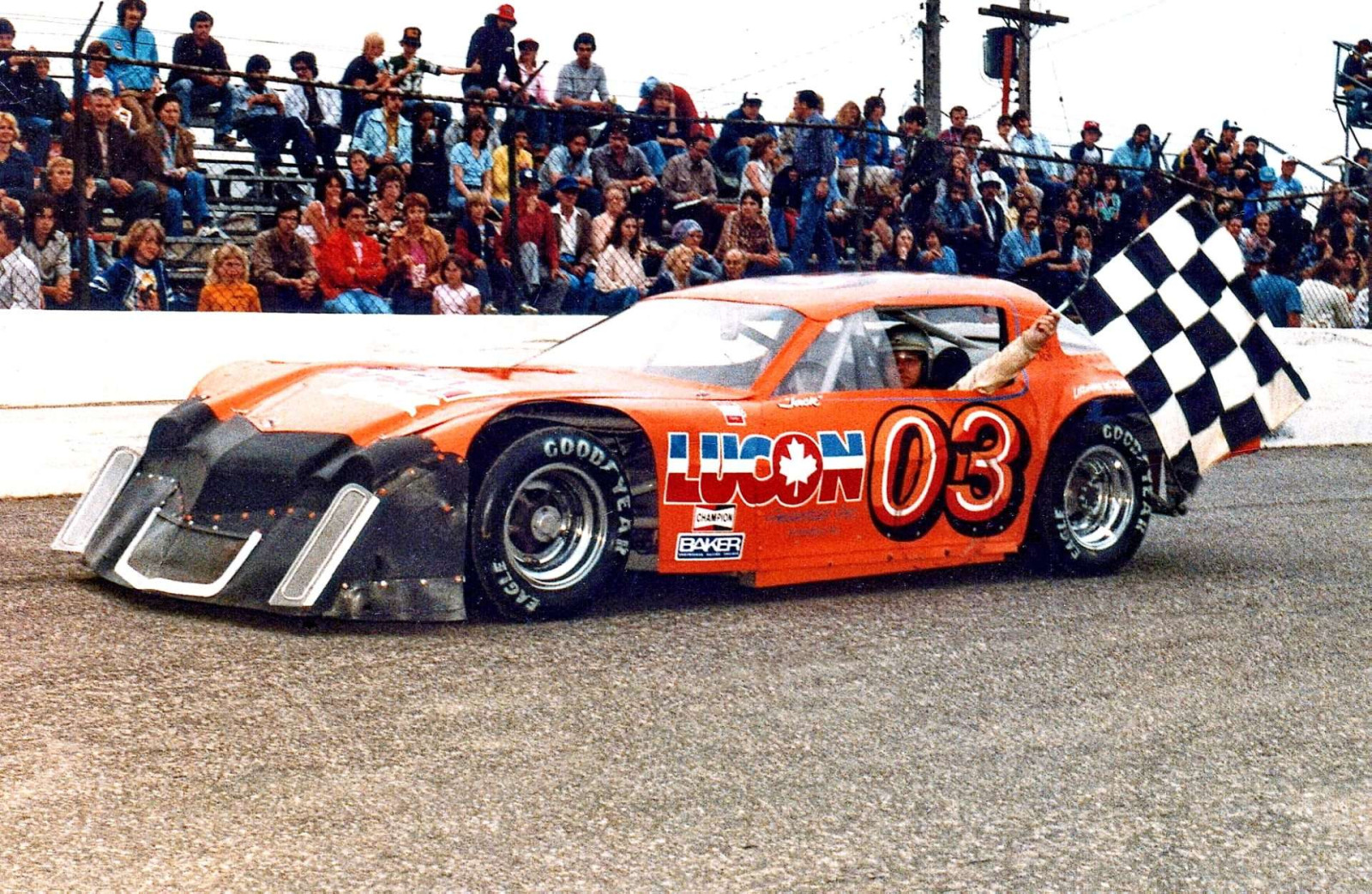
Another memorable moment came in the early 1980s, recently refreshed in my memory by Jim Bulmer. Jack had the Keytours sponsorship at the time, and they happened to be sponsoring the race that night at Delaware. But the No. 03 car was missing during qualifying. It rolled in late and had to start dead last. Jack put on an absolute clinic, slicing through the field and winning his sponsor’s race. The crowd went wild. When I asked why he was late, he said, “We broke our motor, and the spare was being rebuilt by Ron Beauchamp, so we borrowed a short block from Larry LaMay and had to piece everything together.” Classic.
Jack and Nan (who sadly passed away on March 3, 2017) ran a successful business, Hallmark Memorials, in Oldcastle, Ontario. Naturally, I had plenty of fun with the town’s name—especially the OLD part! Jack continued to win track championships on both sides of the border. His battles with Don Mallat and Larry LaMay at Windsor’s Checker Flag were the stuff of legend. Jack even became a part-owner of the track in 1972.

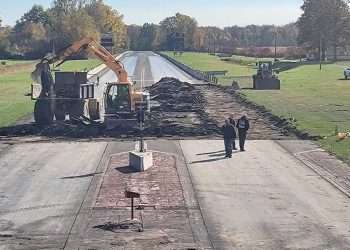
When CASCAR scheduled a race there in 1992, I joked that it would be a great spot to build a race track—shoulder punch and laughter, as always. Unfortunately, the track closed soon after under dubious circumstances. Built on former Ford foundry slag land, it was suddenly deemed “condemned,” and, just as suddenly, a subdivision appeared. Go figure. Jack just shrugged when I asked him about it. Always the cool guy.
He was voted Most Popular Driver at Checker Flag twelve times—including six years in a row.

He had long-standing sponsorship from Windsor Automotive and worked closely with talented, if volatile, engine builder Gary Custer—the polar opposite of Jack in temperament. Around 1987, Jack arrived at a CASCAR race at Cayuga with a Sportsman car. Since another 03 car was already in the series, Jack simply turned the 03 into a 63. Problem solved. I teased him: “Hey Jack, you’re the only guy whose number matches his age!” Shoulder punch, laughter!

Jack transitioned from Late Models to the CASCAR Series. My good friend, the late John Aarts, had been sponsoring Mark Wilson at the time, and he and I would watch races from the tower at Delaware almost every Friday. One thing led to another, and we started betting $20 on our respective drivers—his J-AAR Dodge, and the Motion T-Bird driven by my son Paul. That first year, John didn’t win any money off me. The next year, he came back with a new driver: “Speedy” Jack Monaghan.

“Great choice,” I told him. But lucky for me, John didn’t attend every race night. The ones he did? Paul beat Jack. Two years running. By the third year, John refused to bet—ironically, that’s when Jack had a strong season.
Years later, CASCAR announcer (and CMHOF member) Ron St. Clair arranged a pre-race interview on London radio featuring Jack and son Paul. When Paul was asked about his racing influences, he said Jack had always been one of his favourite drivers growing up. In fact, he and his best friend Shawn Brooks (both ten at the time) would stand in Corner 4 and race Jack—usually leading restarts—on foot down to the start/finish line. On race day, I got my usual punch and a big laugh from Jack, this time with Paul included: “Jack, you ARE old!” More punches, more laughter.

Jack raced in CASCAR for several more years before retiring, maintaining his J-AAR sponsorship even after John Aarts was tragically killed in 2002. That sponsorship legacy continues to this day. Ray Morneau, a third-generation racer, carries the Speedy Jack torch, running the same No. 03 and colours, with two Delaware Speedway track championships and strong results in the APC Series.
The Aarts family has kept the tradition alive, too. Jonathon Aarts, John’s son, recently purchased a Late Model of his own, maintained by the Morneau family and supported by various J-AAR Group companies. “I didn’t want the kids to have all the fun!” he joked. Jon had a solid rookie season and held his own.

Jack passed away on September 15, 2021, but his legacy remains strong. The Jack “Speedy” Monaghan Fan Page on Facebook has over 500 members, with new photos and stories still popping up. His daughter, Leanne Paquette, a registered nurse and nursing professor at the University of Windsor, took a leave of absence to care for Jack during his illness—a true gift of love.
Many people have shared thoughts about Jack:
- Louie Bennett, former CASCAR Tech Director: “Jack was always a top runner at any track he visited—and an even nicer man off the track.”
- Sean Dupuis, former CASCAR National Champion: “It’s absolutely long overdue for Jack to be in the Hall. When I started racing, he’d always say, ‘Hey kid, how’s it going?’”
- Ray Morneau: “I talked to Jack almost every day. The wealth of knowledge he had was amazing.”
Jack’s fans and fellow competitors—and even the toothpick manufacturers—definitely miss “Speedy,” but the legacy he left behind continues to inspire. His nephews Ron and Dan Monaghan continue to support his memory at events and at the track.
Gone, but certainly not forgotten.