There’s one party that no driver ever wants to be invited to and that’s the Last Row Party at the Indianapolis Motor Speedway. Before you can compete in the NTT INDYCAR series’ Indianapolis 500, you must qualify for the ‘Greatest Spectacle in Racing.’
There is a real party for those who aren’t the 30 fastest drivers. Only the first ten rows, 30 cars, are confirmed in the field on day one of qualifying. The four remaining drivers of the 34 entries will have a second chance to fight their way into the 33-car field the next day. But one driver will go home.
Making the field for the 109th Indianapolis 500 may be the most difficult, agonizing and dangerous experience for any driver – having to run four laps, or 10 miles, at over 225 mph. One driver described it as terrifying and exhilarating at the same time. It’s a pressure cooker because all is on the line, trying not to disappoint family, friends and team members who put in the long work hours, and sponsors that could lose interest if you aren’t winning.
Graham Rahal has experienced the Last Row Party the last two years. In 2023, Rahal was bumped by his own teammate, Jack Harvey, who made three runs while Rahal sweated it out in his race car, literally, on a hot day. Harvey improved by anticipating what was needed, learning from the previous run. But Rahal could not take the risk of forfeiting the time he set and was bumped. In 2024, once again, Rahal was the slowest of 33 cars, the only driver who had a four-lap average of less than 230 mph.

“We’ve not really had the speed here the last couple years,” explained Rahal, who qualified 30th for the 109th running, with a speed average of 229.863 mph, edging Marco Andretti by 0.006 mph. “We have turned over so many stones. You start to just wonder, if we don’t find any speed, what can cause it? We had a change in our engineering core. Brought in several guys from Formula One, and unfortunately, they really didn’t have a good grasp on what Indianapolis is.
“People often don’t understand how difficult this sport is,” he continued. “It’s a game of millimeters. The methodology that they brought really put us on the back foot. It continuously evolves all the time. You see what some of the other teams are doing with their gearbox prep, upright prep, and all these sorts of things. We have had to do some catching up.”


The current car became much more difficult to drive due to the added 100+ lbs. for the hybrid system, making it tail happy. Not all drivers adapt to driving a loose race car. Teams chase the track conditions where wind and temperature have a major effect. And, for Saturday’s qualifying, there were 40 mph wind gusts.
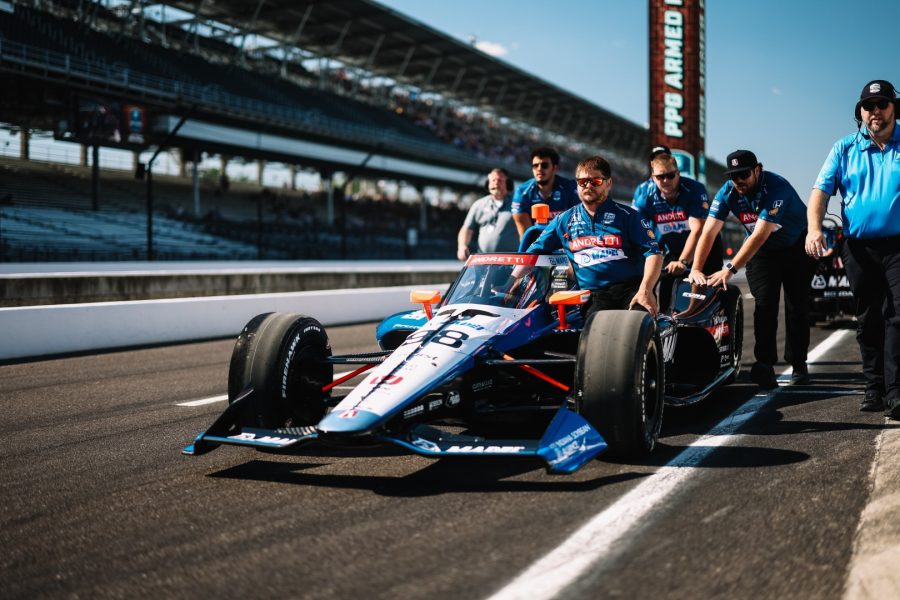
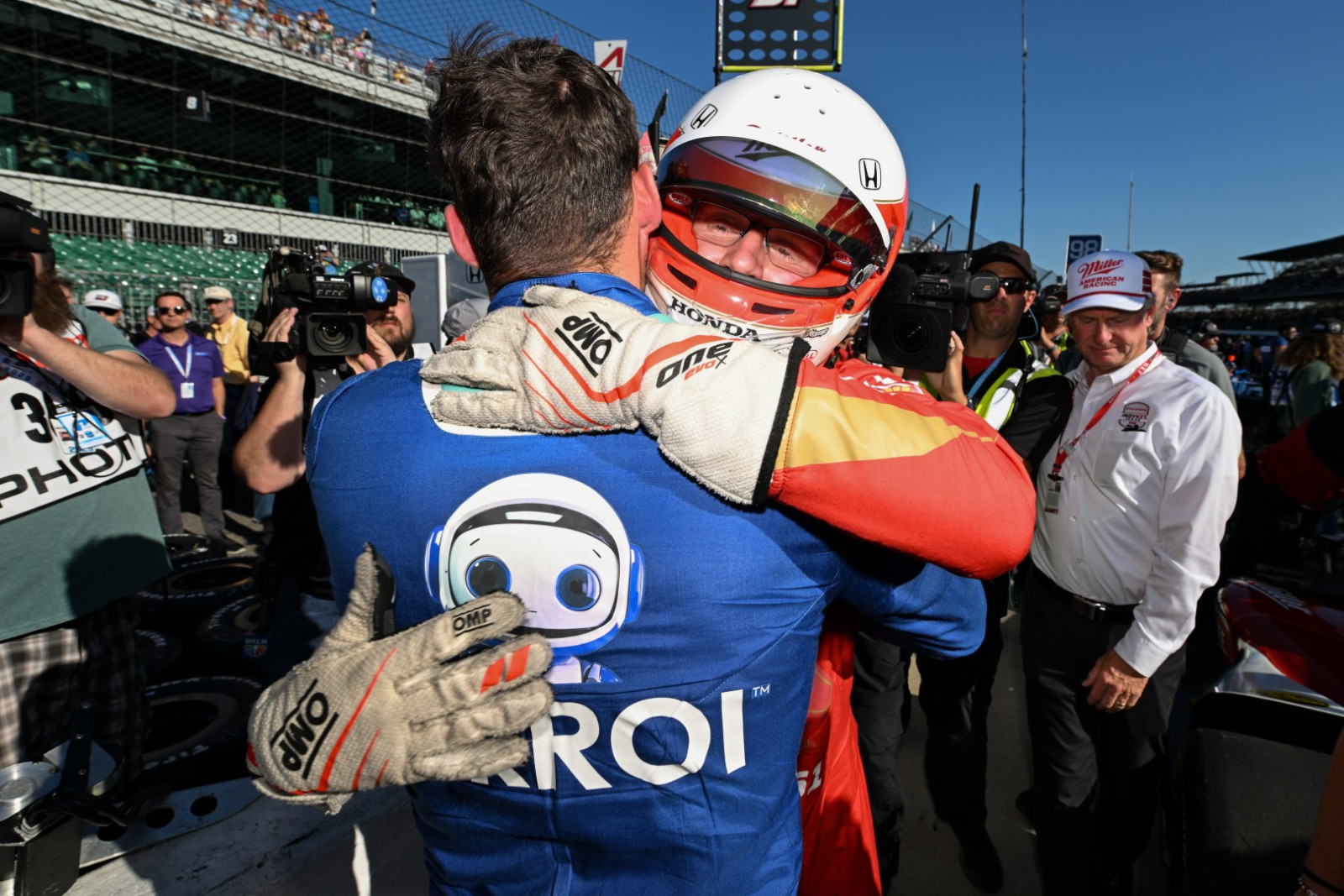
For this year’s race, Marco Andretti (unhappy with the balance of his car in an Indy-only program for Andretti Global), Marcus Armstrong (crashed in pre-qualifying practice and had to go to his backup car at Meyer Shank Racing), Rinus VeeKay and Jacob Abel (teammates driving for Dale Coyne) would have to fight for the three remaining spots on Sunday. It was VeeKay who beat the young rookie, Abel, for 33rd.
The new European team that joined the NTT INDYCAR series this year, Prema, hired Canadian engineer Michael Cannon, who some credit for the speedway success of the Ganassi team and later Penske, over the last few years. But his tenure was short lived in January, likely because the engineers with European racing experience ignored his advice and knowledge. And, like the Rahal team, the Prema engineers may have been heading in the wrong direction. The team has struggled all season just to have cars ready for practice at the five road courses.
When Prema’s rookie driver, Robert Shwartzman, who never raced on an oval before, managed to make it into the Fast 12, then into the Fast Six, it was a Cinderella story. The Israeli captured the 2025 Indianapolis 500 pole, with an average speed of 232.790 mph.
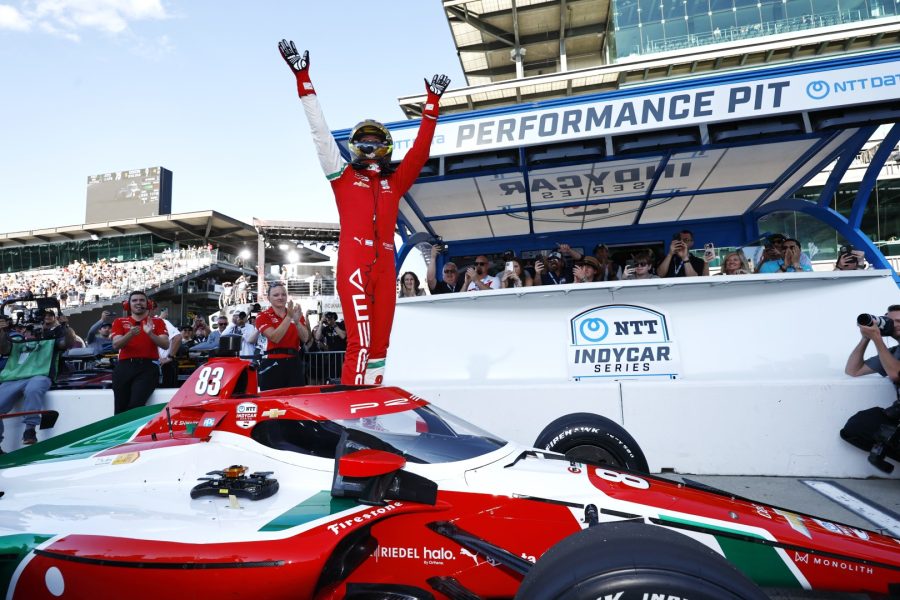
“It’s unbelievable!“ said Shwartzman, who has Callum Ilott, with recent IndyCar experience, as a teammate and Ryan Briscoe as a driving coach. “The car was just amazing. We are slowly improving. The Rookie Orientation Program really helped me adjust to the speeds. My team is going step-by-step – small steps without rushing because, even though I don’t have oval experience, I’ve heard people say that Indy doesn’t forgive. One slight mistake can cost you a lot. We worked on the balance for qualifying. We knew that the car was quite quick. That was something unbelievable, especially going 240 miles an hour, which is like 385 kilometers an hour. I’ve never driven a car so fast.”
Shwartzman out-qualified Takuma Sato and Pato O’Ward, joining him in the front row. Many in the paddock felt that the Prema team could’ve been fighting just to make the last row. But Prema hired Eric Leichtle, a former Penske engineer, who worked with Josef Newgarden and knows the ins and outs of Indianapolis.
The Team Penske drivers were eliminated from pole contention, even though all three made it into the Fast 12. Scott McLaughlin had a big shunt in turn two in practice and slid down the track upside down, writing off his car. Both Newgarden and Will Power’s cars did not pass technical inspection, so they were withdrawn by the team instead of requalifying on Sunday. They have been moved to 32nd and 33rd on the starting grid, respectively.
That should make the real Last Row Party, held at Dallara’s lndyCar Factory in Speedway, IN, all that more interesting to fans, who can buy tickets for the May 22 evening event, which offers a chance to meet the drivers, enjoy appetizers and two drinks per person, starting at C$90.