Like the horror movie trope goes: He’s baaaaaack.
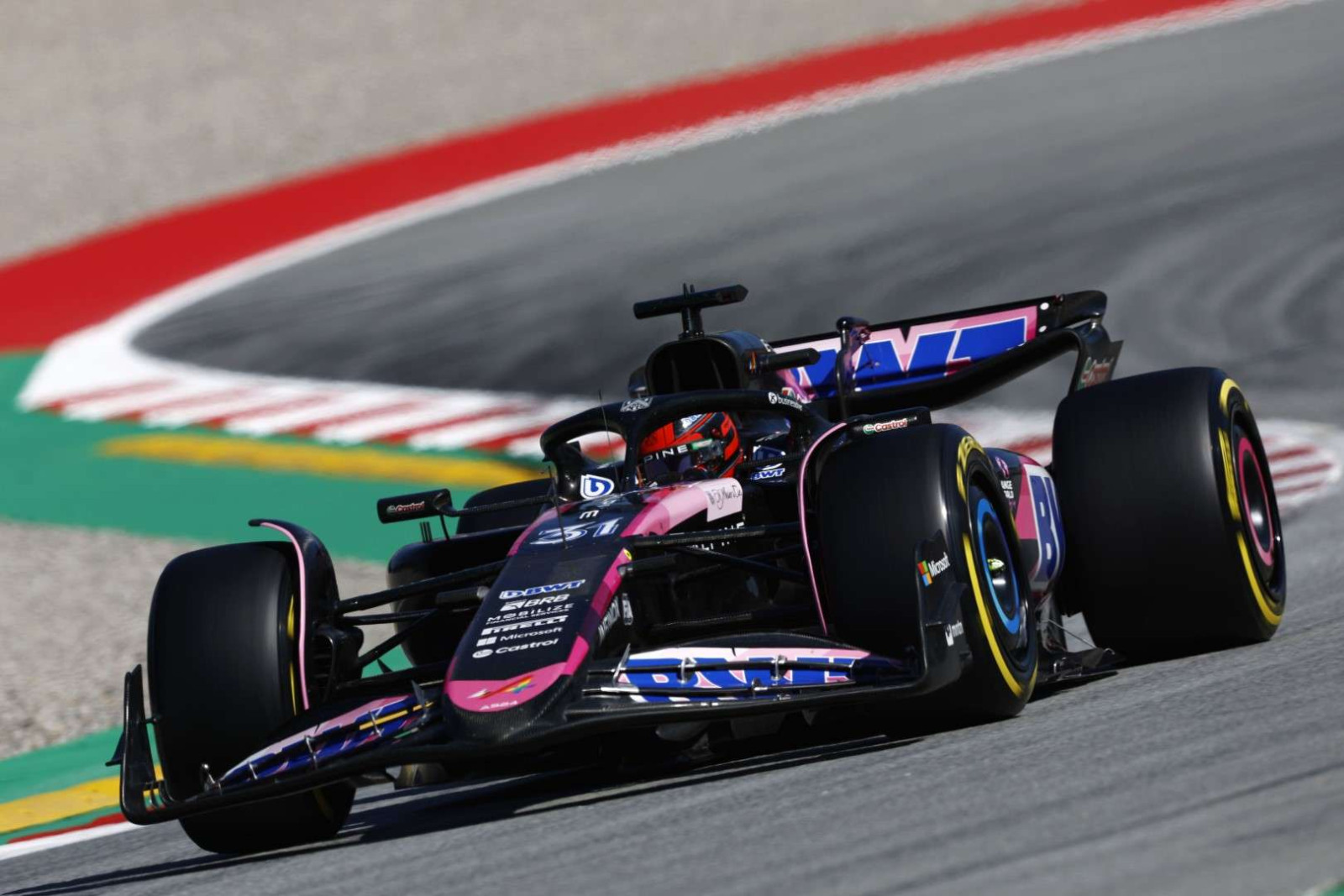
While rumours of an imminent announcement swirled in Montreal during the Canadian Grand Prix, the Alpine F1 team finally announced former Renault team boss Flavio Briatore as its new executive director last week. He will be a special advisor to Alpine F1 chief Bruno Famin.
The 74-year-old Italian served as the Benetton boss in the 1990s and won two driver titles with Michael Schumacher. Later, he scored two more with Fernando Alonso in the mid-2000s, after the team became Renault F1.
Mention Briatore’s comeback privately to anyone in the paddock and they’ll give you the side eye, and not just due to the lifetime ban imposed by Formula One after the “Crashgate” scandal of the 2008 Singapore Grand Prix.

That said, don’t include Famin in that group, after he brushed off questions related to Briatore’s past in Friday’s Fédération Internationale de l’Automobile press conference in Spain.
“I don’t really mind about the past — I’m always looking about future and trying what we can get and to get our team better,” he said. “What I see with having Flavio as an advisor of the team is the opportunity to have his experience and to help us. He has very high-level knowledge of Formula 1. He knows a lot of people and I’m sure he will support us in developing the team faster and better.”

That may be true, but the problem lies in the methods Briatore used to find ways to win.
For those who don’t recall, Briatore and the Renault team’s chief engineer, Pat Symonds, masterminded a plan to have one of its drivers, Nelson Piquet Jr., crash deliberately at an opportune time in the 2008 Singapore Grand Prix to set the stage for a win by Alonso.
Piquet hit the wall at Turn 17 on Lap 14 and brought out the safety car just after Alonso pitted. After all the leading cars pitted under the safety car period, Alonso took the lead and went on to win the Grand Prix.
In the end, the FIA banned Briatore for life and slapped a five-year ban on Symonds. While a French court later overturned the lifetime ban, few thought Briatore would ever be involved with an F1 team again.
While having Briatore back on the payroll remains problematic for the sport as a whole, it will definitely also cast doubt on any steps forward made by the team.
You wouldn’t know this from F1’s official website, which tackled Briatore’s appointment by ignoring the controversy completely with a throwaway line about the Italian “vacating his position in 2009 and taking some more time out of F1.”
Unfortunately, the issues with Briatore run much deeper than the 2008 Singapore Grand Prix, which in itself should be enough to keep him out of any team’s operations.
Fans might recall several scandals involving the Benetton team, including having “engine management software” installed on the 1994 Benetton — essentially traction control — and removing a filter from the re-fueling equipment that allowed its cars to be filled faster. That tampering resulted in a flash fire during a pit stop by Jos Verstappen in the 1995 German Grand Prix that luckily caused no serious injuries.
Briatore’s reign as a team boss also included the rumour that his teams actually employed special units dedicated to finding creative and undetectable ways around the rules. The story goes that Bob Bell disbanded them after being appointed acting team principal in 2009 following Briatore’s departure.
In the end, it might not matter as Briatore’s return fuelled speculation that Alpine may be looking to exit F1 as a manufacturer and leave the new customer outfit in the Italian’s hands when it departs.
No matter what happens here, F1 loses.
Meanwhile, Max Verstappen of Red Bull took his seventh win of 2024 in Spain, beating a feisty Lando Norris, who put his McLaren on pole but could not convert his qualifying speed into a win. In the end, Verstappen repelled the challenge, crossing the line 2.219 seconds ahead of Norris. Mercedes driver Lewis Hamilton rounded out the podium in third.